Free shipping over $150All prices in USD
Muse and Oak

Materials

Seven materials.
Named, not hinted at.

Every piece states what it is made of and what it weighs, because those two facts tell you more about how something will feel and last than any adjective. Here is what each material is for — and, more usefully, what will ruin it.

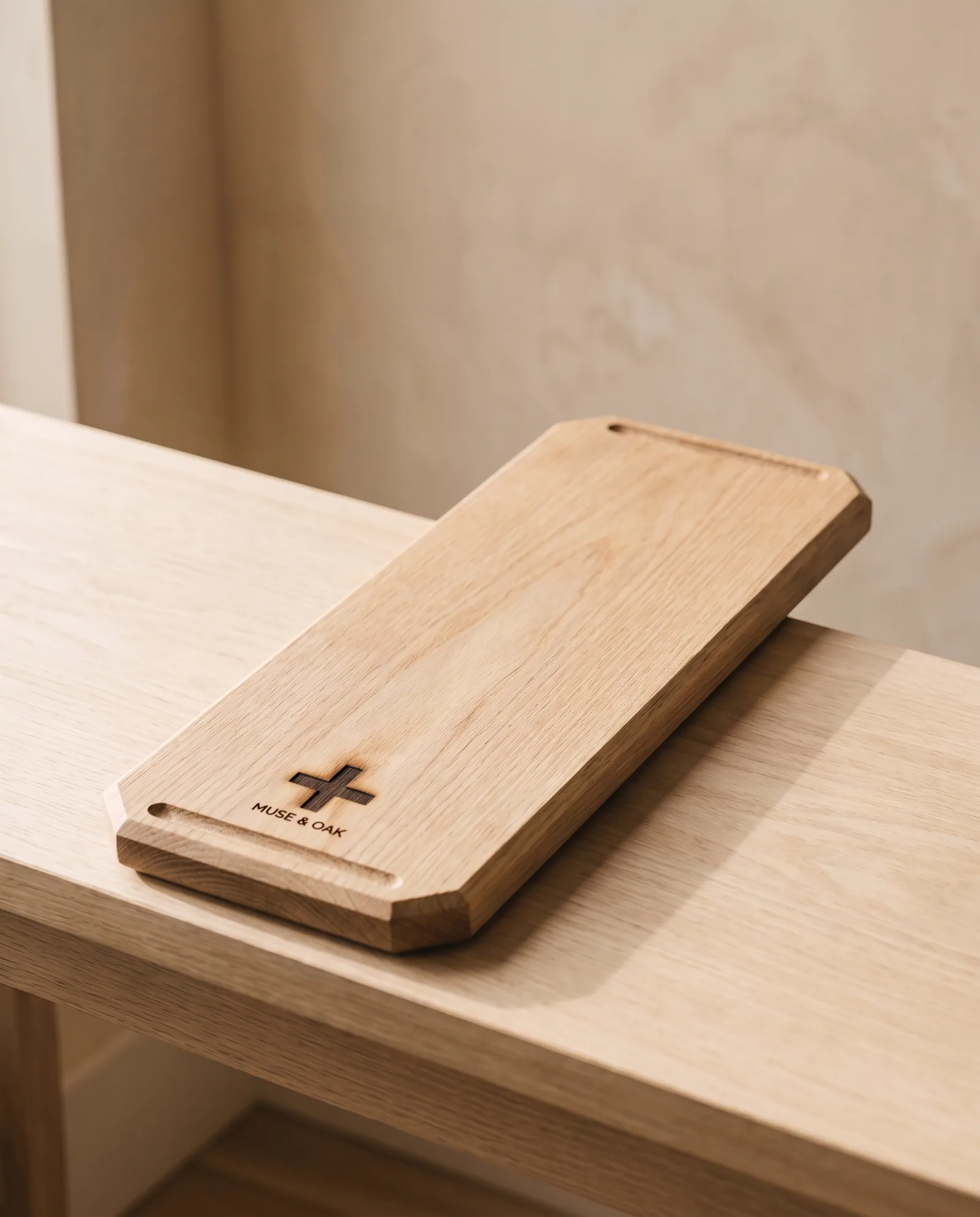
A solid white oak serving board in daylight

Close-grained, hard, and dimensionally the best-behaved timber for small furniture. It is pale gold when it is cut and it warms over years into honey — the single biggest change anything here will make. Quarter-sawn where the piece shows a wide face, so the grain moves less across the seasons.

What it is for

Everything structural. Hard, close-grained and the best-behaved timber at this scale — it takes a drawn joint and holds it.

What ruins it

Standing water, and a dishwasher on anything oiled. Big humidity swings split a solid top, which is why none of it belongs in a conservatory or outdoors.

European Ash

Solid, straight-grained

Lighter and springier than oak, with a long open grain that takes a curve without steaming twice. Used where a piece needs to flex rather than resist — a peg rail, a rack. It is paler than oak and stays paler; the two are deliberately not mixed in one piece.

What it is for

Anything that needs to flex rather than resist — the peg rail. Springier than oak and noticeably paler, permanently.

What ruins it

Damp. Ash moves more than oak with humidity, so it is wrong for a bathroom. It also will not match oak in colour and is not meant to.

Washed Linen

205–270gsm, stonewashed

European flax, stonewashed before it is cut so it arrives soft instead of arriving stiff and becoming soft. It creases, permanently and by design — a linen that does not crease has been finished with something that will wash out anyway. It gets better for about five years and then stays there.

What it is for

Throws, runners and tea towels. Arrives soft rather than becoming soft, and gets better for about five years.

What ruins it

Fabric softener, which coats the fibre and stops it absorbing. Chlorine bleach. Nothing stops it creasing — that is the material, not a finish that failed.

Lambswool

420gsm, woven not knitted

Undyed and dyed lambswool, woven rather than knitted so it holds an edge on a cushion. It pills for the first month where it rubs, which is short fibre working its way out and stops on its own — a comb, not a complaint. It is warm, it is not washable, and it does not like moths.

What it is for

Cushion covers that hold a square edge. Warm, dense, and it recovers its shape rather than going baggy at the corners.

What ruins it

A washing machine — wool at this weight felts, and the cover cannot be recovered. Moths, if it is stored warm and dark all summer.

Stoneware

Fired to 1260C, vitrified body

Thrown and fired to vitrification, so the body is waterproof without relying on the glaze. Every piece varies in glaze break and colour depth — that is a wet glaze on a curved wall, not a defect, and two pieces from the same run will not match exactly.

What it is for

Holding water without depending on the glaze to do it. Fully waterproof even where the foot is left unglazed.

What ruins it

Frost. Trapped water in an unglazed foot will split a piece left outdoors over winter. Also a flame or an oven — it is neither flameproof nor ovenproof.

Solid Brass

Solid bar and sheet, unlacquered

Solid bar and sheet, unlacquered. It leaves the workshop bright and it will not stay bright: within weeks it dulls to gold and within a year to a soft brown, faster where hands touch it. Polish it back whenever you like, or leave it. A lacquered brass would stay bright and then flake, which is worse.

What it is for

Weight where weight is the point — a trivet that stays put, a candle base that does not tip. Polishes back to bright at any age.

What ruins it

Dishwasher detergent, which stains it black and is not reversible by polishing. Otherwise nothing: it browns, and browning is not damage.

Waxed Cotton

18oz canvas, paraffin and beeswax

Heavy cotton canvas impregnated with a paraffin and beeswax blend. It sheds a shower, it marks and creases where it folds, and the marks are the point — waxed cotton is a material that records use. Re-waxing every couple of years brings it back; washing it strips it for good.

What it is for

Shrugging off a shower and recording use. It creases pale and darkens where handled, and re-waxing brings it back.

What ruins it

Washing or dry cleaning, either of which strips the wax permanently and cannot be undone. Storing it folded flat sets creases you cannot lose.